SBA Loan Options
SBA loan options can help eligible small businesses access financing for working capital, equipment, real estate, business acquisitions, and other approved expenses. The U.S. Small Business Administration supports several loan programs, each designed for different business needs.
The SBA generally does not lend money directly to businesses. Instead, participating lenders provide the financing and follow SBA program requirements.
Understanding the differences between SBA 7(a), 504, Microloan, and other SBA programs can help business owners identify the financing structure that fits their needs.
What Are SBA Loans?
SBA loans are business financing products provided by participating lenders with support from the U.S. Small Business Administration.
The SBA works with banks, credit unions, and other participating financial institutions to make financing more accessible to qualifying small businesses.
The SBA’s guarantee can reduce some of the lender’s risk. However, the lender still evaluates the borrower’s creditworthiness and repayment ability.
Different SBA programs serve different purposes. Some focus on general business financing, while others are designed for equipment, real estate, smaller loans, or specialized needs.
Main SBA Loan Options
The SBA offers several financing programs.
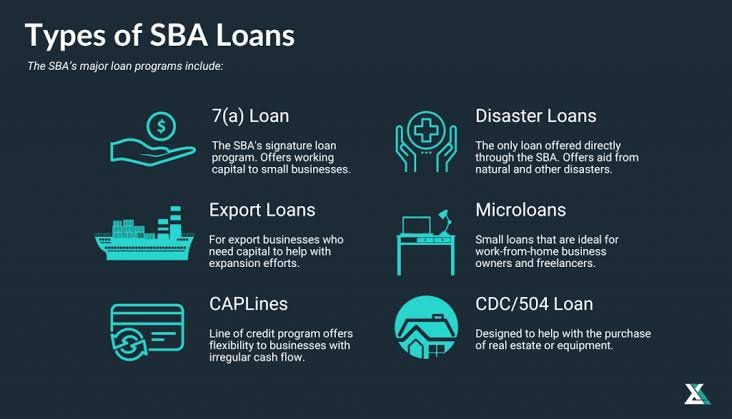
The most commonly discussed options include SBA 7(a) loans, 504 loans, Microloans, and disaster-related business assistance.
SBA 7(a) Loans
The SBA 7(a) program is the agency’s primary business loan program.
Eligible businesses can use 7(a) financing for several purposes, including working capital, equipment purchases, real estate, business acquisitions, and certain debt refinancing.
The maximum 7(a) loan amount is $5 million.
Because the program supports many different business purposes, it can be relevant to businesses with varied financing requirements.
However, approval depends on SBA eligibility requirements and the participating lender’s underwriting standards.
SBA 504 Loans
The SBA 504 loan program is designed primarily for major fixed assets.
It can help eligible businesses finance assets such as land, buildings, facility improvements, and long-term machinery or equipment.
The program is generally structured around long-term fixed-asset investment rather than ordinary working capital.
Businesses planning a major property or equipment purchase may therefore investigate 504 financing.
SBA Microloans
SBA Microloans are designed for smaller financing needs.
The program provides loans of up to $50,000 through approved intermediary lenders.
Microloan funds can generally be used for working capital, inventory, supplies, furniture, fixtures, and equipment.
They can be useful for smaller businesses that do not need the larger financing available through programs such as 7(a).
SBA Disaster Loans
SBA disaster assistance can provide financial support to eligible businesses affected by declared disasters.
These programs can help qualifying businesses address certain physical damage and economic losses resulting from an eligible disaster.
Availability depends on the specific disaster declaration and applicable SBA rules.
Businesses affected by a disaster should check current SBA requirements before applying.
SBA 7(a) Loan Types
The 7(a) program includes different delivery methods designed for different financing situations.
Standard 7(a)
The standard 7(a) program can provide financing for a wide range of eligible business purposes.
The maximum loan amount is $5 million.
The participating lender evaluates the application and determines whether the business meets its credit requirements.
7(a) Small Loan
The 7(a) Small Loan program is designed for smaller financing needs.
It can provide loans of up to $500,000.
The program can be used for eligible business purposes covered by the broader 7(a) program.
SBA Express
SBA Express is designed to provide an accelerated process for certain SBA-backed financing.
The program has a maximum loan amount of $500,000.
Participating lenders generally have greater authority to make credit decisions under the program.
The lender’s own requirements still apply.
What Can SBA Loans Be Used For?
One of the main advantages of SBA financing is the range of eligible business uses.
Working Capital
Businesses can use eligible SBA financing to support working capital requirements.
This can include funding needed to operate the business and manage normal cash-flow requirements.
The specific permitted use depends on the SBA program and loan agreement.
Equipment
SBA financing can help eligible businesses purchase equipment.
Examples may include machinery, technology, vehicles, commercial appliances, and other qualifying business assets.
Businesses should match the financing term with the purpose and expected useful life of the asset.
Real Estate
Certain SBA financing can be used to acquire or improve eligible commercial real estate.
The SBA 504 program is particularly focused on major fixed assets.
Businesses considering property financing should review the program’s occupancy and eligibility requirements.
Business Acquisition
Eligible SBA 7(a) financing can be used for business acquisitions.
This can provide entrepreneurs with a financing option when purchasing an existing business.
The lender will generally review the financial performance of the business being acquired, the buyer’s qualifications, valuation, and ability to repay the loan.
Debt Refinancing
Certain existing business debt may be eligible for refinancing through an SBA-backed loan.
The refinancing must meet applicable program requirements.
Borrowers should compare the new loan’s total cost with the existing debt before proceeding.
SBA Loan Eligibility Requirements
Eligibility varies by SBA program.
However, businesses generally need to satisfy several fundamental requirements.
For-Profit Business
Most SBA business loan programs are intended for eligible for-profit businesses.
The business must also meet the applicable SBA definition of a small business.
Location
For many SBA programs, the business must operate in the United States or its territories.
Specific location rules can vary by program.
Ability to Repay
A business must generally demonstrate the ability to repay the proposed financing.
Lenders may review historical revenue, cash flow, financial statements, tax returns, debt obligations, and projections.
Creditworthiness
Lenders evaluate the creditworthiness of the business and its owners where applicable.
There is no single credit score that guarantees SBA loan approval.
Each lender uses its own underwriting process within applicable SBA requirements.
What Do SBA Lenders Look For?
Although the SBA establishes program rules, participating lenders still evaluate borrowers.
Several factors can influence an application.
Credit History
Personal and business credit information may be reviewed.
For newer businesses, the owner’s personal credit history may be particularly relevant.
Cash Flow
Cash flow helps demonstrate whether the business can handle loan payments.
Lenders may examine bank statements, income statements, balance sheets, and other financial records.
Business Experience
Relevant management and industry experience can help demonstrate that the applicant understands the business and its market.
The importance of experience depends on the business and financing request.
Collateral
Collateral requirements depend on the SBA program, loan size, and lender.
Some SBA financing may require available collateral when appropriate.
A lender may also require a personal guarantee from owners.
SBA Loans for Startups
Some startups can qualify for SBA-backed financing.
However, startups generally face additional challenges because they lack established operating history.
A lender may place greater emphasis on the owner’s personal credit, industry experience, business plan, financial projections, available capital, and collateral.
A strong business plan should explain how the company will generate revenue and repay the financing.
Startups should also avoid requesting more financing than their projected cash flow can support.
SBA Loans for Existing Businesses
Established businesses may have more financial information available for lenders to evaluate.
A company with consistent revenue and documented cash flow can provide historical records showing how it has performed.
Existing businesses may use SBA financing for expansion, equipment, real estate, acquisitions, working capital, or other eligible purposes.
The business still needs to meet the relevant SBA program and lender requirements.
SBA 7(a) vs. SBA 504
The two programs serve different financing needs.
An SBA 7(a) loan offers broader flexibility and can support uses such as working capital, equipment, real estate, and acquisitions.
An SBA 504 loan is primarily focused on major fixed assets such as real estate and long-term equipment.
A business seeking working capital may therefore investigate 7(a) financing, while a company purchasing a major property may examine 504 financing.
The appropriate program depends on the specific project and eligibility requirements.
SBA Loan Interest Rates and Fees
SBA loan costs vary depending on the program, lender, loan amount, repayment term, and other factors.
Some SBA loans have variable rates, while others can have fixed-rate structures depending on the financing arrangement.
Lenders may also charge permitted fees.
Before accepting an SBA loan, review the interest rate, guarantee-related costs, lender fees, repayment schedule, and total cost of borrowing.
A loan with a lower scheduled payment may still cost more overall if it has a longer repayment period.
SBA Loan Repayment Terms
Repayment terms vary by SBA program and the purpose of the financing.
For example, financing for real estate may have a longer repayment period than financing for certain equipment or working capital.
The lender determines the final repayment structure within the applicable SBA program rules.
Choose a repayment schedule that aligns with the business’s expected cash flow.
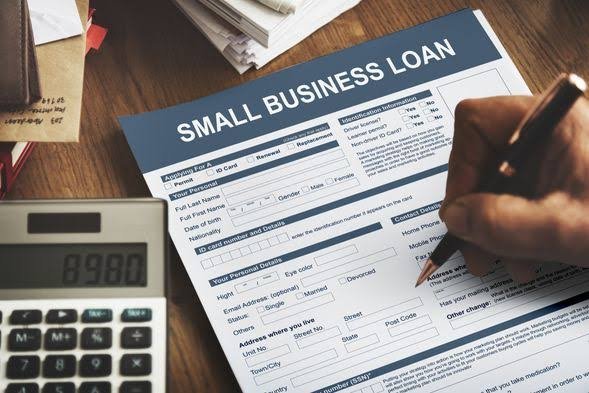
Documents Needed for an SBA Loan
The exact documentation depends on the lender and loan program.
Applicants may be asked for:
- Business tax returns
- Personal tax returns
- Financial statements
- Business bank statements
- Personal financial information
- Business licenses
- Ownership information
- Existing debt information
- Business plans
- Financial projections
- Information about collateral
Larger or more complicated financing requests may require additional documentation.
Preparing these records before applying can make the process more efficient.
How to Apply for an SBA Loan
The application process generally begins by identifying the appropriate SBA program.
Next, determine how much financing the business needs and how the funds will be used.
Prepare financial records and supporting documents before contacting lenders.
Businesses can work with participating banks, credit unions, and other SBA lenders.
The SBA also offers Lender Match, which can help eligible businesses identify participating lenders based on their financing needs.
Once you receive an offer, review the interest rate, fees, repayment period, collateral requirements, guarantees, and other terms carefully.
How Long Does an SBA Loan Take?
The timeline varies significantly.
Some applications can move relatively quickly when the financing request is straightforward and the borrower has complete documentation.
More complex loans can take longer because they may require detailed financial analysis, collateral evaluation, business valuation, or other reviews.
SBA Express is designed for an accelerated process, but actual timing still depends on the participating lender.
Submitting complete and accurate information can help avoid unnecessary delays.
SBA Loan Alternatives
SBA financing is not the only option available to small businesses.
Traditional Bank Loans
A conventional business loan may work for companies with strong financial records and established banking relationships.
The bank’s own underwriting requirements apply.
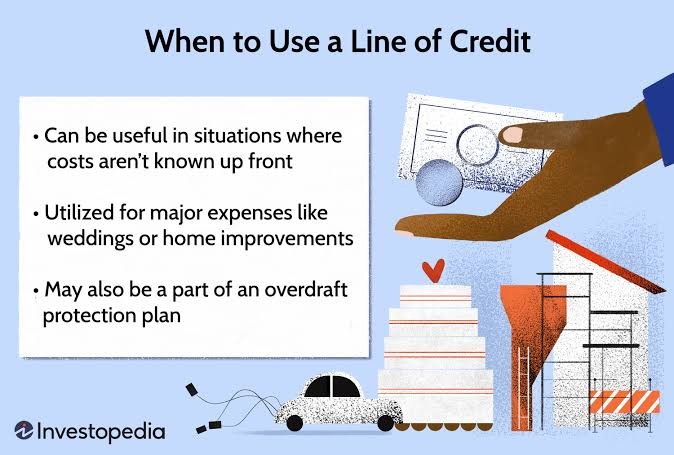
Business Lines of Credit
A business line of credit provides flexible access to capital up to an approved limit.
It can be useful for short-term working capital and recurring cash-flow needs.
Equipment Financing
Equipment financing can help businesses purchase specific assets.
The equipment may serve as collateral depending on the agreement.
Business Credit Cards
Business credit cards can help manage smaller purchases and recurring expenses.
However, businesses should carefully review interest rates and fees when carrying balances.
Common SBA Loan Mistakes
Applying for the wrong SBA program can create unnecessary delays.
Start by identifying exactly what the business needs to finance.
Another common mistake is submitting incomplete financial information.
Make sure tax returns, financial statements, bank records, and other requested documents are accurate and current.
Business owners should also avoid focusing only on the loan amount.
The interest rate, fees, repayment period, collateral, guarantees, and total cost are equally important.
Finally, do not borrow more than the business can reasonably repay.
Frequently Asked Questions
What is the most common SBA loan?
The SBA 7(a) program is the agency’s primary business loan program. It supports a broad range of eligible business purposes, including working capital, equipment, real estate, acquisitions, and certain debt refinancing.
What is the maximum SBA loan amount?
The maximum amount depends on the SBA program. Standard 7(a) loans can reach $5 million, while SBA Microloans have a maximum of $50,000.
Can startups get SBA loans?
Yes, eligible startups can potentially qualify for certain SBA-backed financing. However, they may face additional underwriting requirements because they have limited operating history.
What credit score is required for an SBA loan?
There is no single SBA-mandated credit score that guarantees approval for every loan. Participating lenders evaluate creditworthiness using their own underwriting standards and applicable SBA requirements.
Can SBA loans be used to buy a business?
Eligible SBA 7(a) financing can be used for business acquisitions. The transaction must meet applicable SBA and lender requirements, including requirements related to repayment ability and the business being purchased.
Conclusion
SBA loan options provide several ways for eligible small businesses to access financing.
The SBA 7(a) program offers broad flexibility, while SBA 504 financing focuses primarily on major fixed assets. SBA Microloans serve smaller funding needs, and other programs address specific circumstances.
Before applying, determine exactly how much financing you need and how the money will be used. Then compare eligible programs and participating lenders based on interest rates, fees, repayment terms, collateral requirements, and total borrowing costs.
A well-prepared application with realistic financial information can make it easier for lenders to evaluate the business and its ability to repay.