Debt Consolidation Loans
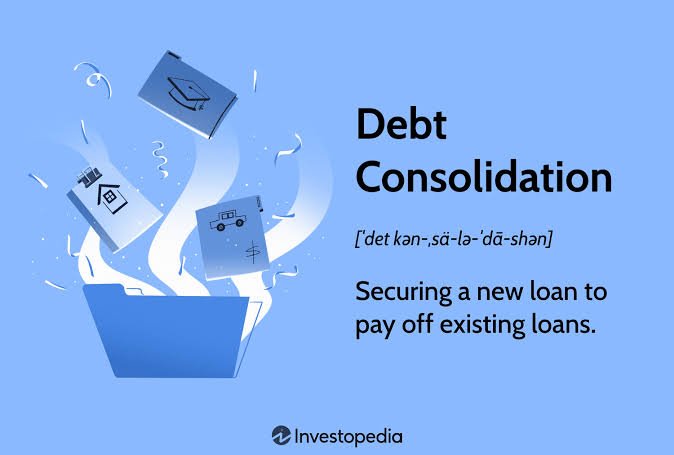
Debt consolidation loans allow borrowers to combine multiple debts into one new loan with a single payment. Depending on the terms, consolidation can simplify repayment and may reduce the interest rate or monthly payment.
However, a lower monthly payment does not always mean lower overall costs. A longer repayment period, fees, or a higher total interest charge can make a consolidation loan more expensive over time.
Before consolidating debt, compare the new loan with your existing balances and understand exactly what you will pay.
What Is a Debt Consolidation Loan?
A debt consolidation loan is a new loan used to pay off multiple existing debts.
Instead of making separate payments to several creditors, you generally make one payment on the new loan.
For example, someone with multiple credit card balances could use a personal loan to pay those balances. The credit card debts would then be replaced by the new consolidation loan.
Personal installment loans are commonly used for debt consolidation. These loans typically provide a fixed amount that is repaid through installments over a specified period.
The goal is usually to simplify repayment, reduce borrowing costs, or create a more manageable payment structure.
How Do Debt Consolidation Loans Work?
The process is relatively straightforward.
You apply for a new loan with a bank, credit union, online lender, or another financial institution.
If approved, the loan provides funds that can be used to pay eligible existing debts. Depending on the lender, the money may be sent directly to your creditors or deposited into your account for you to distribute.
After the old debts are paid, you make payments on the new consolidation loan.
Instead of managing several balances, you now have one loan with one repayment schedule.
Example of Debt Consolidation
Suppose you have three credit card balances.
One card has a $4,000 balance, another has $3,000, and a third has $2,000.
You could potentially use a $9,000 personal loan to pay those balances.
The three credit card balances would then be replaced by one $9,000 loan, plus any applicable fees.
Whether this saves money depends on the new loan’s APR, fees, repayment term, and the rates on your existing debts.
Benefits of Debt Consolidation Loans
Consolidation can offer several potential benefits.
One Monthly Payment
Managing several debt payments can be difficult.
A consolidation loan can replace multiple payments with one scheduled payment.
This can make it easier to track your obligations and organize your monthly budget.
Potentially Lower Interest Rate
A consolidation loan may have a lower interest rate than some existing debts.
If the new APR is lower and fees are reasonable, consolidation may reduce the cost of carrying the debt.
However, approval and pricing depend on your credit profile and lender.
Simplified Debt Management
Multiple credit cards and loans can have different due dates, minimum payments, and interest rates.
Combining them into one loan can simplify your repayment process.
The Consumer Financial Protection Bureau notes that debt consolidation can simplify the number of payments, but borrowers should also consider the full costs and loan terms.
Fixed Repayment Schedule
Many personal consolidation loans have a defined repayment period.
This means you know how long repayment is expected to take and can plan your budget around the scheduled payments.
A fixed payment structure can be useful for borrowers who want a clear payoff timeline.
Potential Disadvantages of Debt Consolidation
Debt consolidation is not automatically cheaper.
There are several risks to consider before applying.
You May Pay More Overall
A lower monthly payment can sometimes result from extending the repayment period.
You may pay less each month but continue making payments for several additional years.
The CFPB specifically warns that a lower monthly payment may result from a longer repayment period, potentially causing you to pay more overall.
Fees Can Increase the Cost
A consolidation loan may include origination fees or other charges.
These costs should be included when comparing the new loan with your existing debts.
A loan with an attractive interest rate may not be cheaper once all fees are included.
Your Debt Is Not Automatically Reduced
Consolidating debt changes how the debt is structured.
It does not automatically eliminate the amount you owe.
You are still responsible for repaying the new loan.
Credit Card Balances Can Return
One risk is using a consolidation loan to pay off credit cards and then building new balances on those cards.
This can leave you with both the new consolidation loan and additional credit card debt.
A successful consolidation strategy should include a plan for controlling future borrowing.
How to Compare Debt Consolidation Loans
Comparing offers carefully is one of the most important steps.
Do not choose a loan simply because it advertises a lower monthly payment.
Compare APRs
The annual percentage rate is an important comparison point.
It can provide a broader view of borrowing costs than the interest rate alone because certain fees may be incorporated into the APR.
Compare the APR of the consolidation loan with the effective cost of your existing debts.
Compare Total Interest
Calculate how much interest you would pay over the full repayment period.
A longer loan term may reduce the monthly payment while increasing the total interest cost.
Look at the entire repayment schedule rather than focusing on the first month’s payment.
Review All Fees
Check for origination fees, application charges, late fees, and other costs.
Some lenders may deduct an origination fee from the loan proceeds.
If you need $10,000 to pay existing debts but the lender deducts a fee, you may receive less than $10,000.
Make sure the loan provides enough funds to accomplish your consolidation goal.
Check the Repayment Term
Compare different repayment periods.
A shorter term generally means higher scheduled payments but can reduce the amount of time interest accrues.
A longer term may provide a lower monthly payment but can increase total borrowing costs.
Choose a term that balances affordability with the overall cost of the loan.
What Credit Score Do You Need?
There is no single credit score that guarantees approval for a debt consolidation loan.
Lenders establish their own eligibility requirements.
They may consider your credit history, income, existing debt, employment, loan amount, and other financial information.
A stronger credit profile may help you qualify for more competitive rates.
If your credit is weaker, you may still find lenders willing to work with you, but the available loans may have higher costs.
Debt Consolidation for Credit Card Debt
Credit card debt is one common reason people consider consolidation.
Credit cards are revolving accounts, meaning borrowers can continue using available credit after making payments.
A personal consolidation loan works differently.
The borrower receives a fixed amount and makes scheduled payments over a defined period.
If the consolidation loan has a lower APR than the credit card balances, it may reduce the interest cost.
However, you should avoid immediately rebuilding the credit card balances after paying them off.
Balance Transfer vs. Consolidation Loan
A balance transfer credit card can be another way to consolidate eligible credit card debt.
A balance transfer moves debt from one credit card to another, often with a promotional interest rate for a limited period.
The promotional period and applicable fees matter.
A personal consolidation loan provides a different structure because it generally has a defined repayment schedule.
Compare the total cost and repayment period of both options before choosing.
Secured vs. Unsecured Consolidation Loans
Debt consolidation loans can be secured or unsecured.
Unsecured Consolidation Loans
An unsecured loan does not require a specific asset as collateral.
Personal debt consolidation loans are commonly structured this way.
The lender instead evaluates your creditworthiness and financial circumstances.
Secured Consolidation Loans
A secured loan is backed by collateral.
Some consolidation products may use a home, vehicle, savings account, or another qualifying asset as security.
Secured financing can create additional risk.
If you fail to meet the agreement’s repayment requirements, the pledged asset may be at risk.
The FTC warns that some consolidation loans can involve putting your home up as collateral.
Debt Consolidation vs. Debt Management
Debt consolidation and debt management are different approaches.
A consolidation loan replaces existing debts with a new loan.
A debt management plan generally involves working with a credit counseling organization to create a structured repayment plan for eligible debts.
Under a debt management plan, you typically make one payment to the counseling organization, which then distributes payments to creditors according to the plan.
A credit counselor may be able to help negotiate lower interest rates or fees with creditors, depending on the circumstances.
Neither approach is automatically right for everyone.
Debt Consolidation vs. Debt Settlement
Debt settlement is different from consolidation.
A debt consolidation loan generally involves paying your existing debts in full with a new loan.
Debt settlement companies instead attempt to negotiate with creditors to accept less than the amount owed.
Debt settlement can carry significant risks.
The CFPB warns that settlement companies may encourage consumers to stop paying creditors, which can result in additional fees, credit damage, collection activity, or lawsuits.
Consumers should understand the difference between consolidation and settlement before signing an agreement.
When Does Debt Consolidation Make Sense?
Debt consolidation may make sense when the new financing improves the overall structure of your debt.
For example, consolidation could be worth considering if you can obtain a meaningfully lower APR without excessive fees.
It may also be useful if managing multiple payments has become difficult.
However, the numbers should support the decision.
Calculate the total cost of your existing debts and compare it with the total cost of the proposed consolidation loan.
When May Debt Consolidation Not Be a Good Fit?
Consolidation may not solve the underlying problem if your expenses consistently exceed your income.
Taking a new loan can provide temporary relief without addressing the reason the debt accumulated.
It may also be unsuitable if the new loan has a higher total cost than your existing debts.
If the only advantage is a lower monthly payment caused by a much longer repayment period, examine the total interest carefully.
How to Apply for a Debt Consolidation Loan
The application process usually begins with reviewing your current debts.
List Your Existing Debts
Write down each balance, interest rate, minimum payment, and remaining repayment period.
Include credit cards, personal loans, medical debt, and other debts that could potentially be consolidated.
Calculate Your Total Debt
Add the balances together.
This gives you a starting point for determining the amount of financing you may need.
Include any applicable loan fees in your calculations.
Check Your Credit
Review your credit reports before applying.
Look for inaccurate information and understand your general credit position.
This can help you identify which lenders may be suitable.
Compare Lenders
Compare banks, credit unions, and online lenders.
Look at APRs, fees, repayment periods, loan amounts, and eligibility requirements.
Some lenders offer prequalification options that can help you review potential terms before submitting a full application.
Read the Loan Agreement
Before accepting an offer, review all terms carefully.
Confirm the amount you will receive, fees, interest rate, monthly payment, repayment period, and total repayment amount.
Do not rely solely on an advertisement or sales representative’s summary.
How to Calculate Whether Consolidation Saves Money
A simple comparison can help you evaluate a loan.
First, calculate the remaining amount you expect to pay on your existing debts.
Then calculate the total repayment amount for the new consolidation loan.
Include all fees in both calculations.
For example, suppose your current debts would cost $12,000 in remaining principal and interest.
A consolidation loan may have a lower monthly payment but require $14,000 in total repayment.
In that situation, the lower monthly payment does not necessarily mean the consolidation is cheaper.
The CFPB recommends considering the loan’s length, fees, and other costs instead of focusing only on the monthly payment.
How Debt Consolidation Can Affect Credit
Applying for new credit can involve a credit inquiry.
The effect depends on the lender and your overall credit profile.
Once the consolidation loan is active, making payments on time can help establish a positive payment history.
However, closing old credit card accounts can affect your credit utilization and account history.
The specific impact varies from person to person.
If you consolidate credit card debt, avoid assuming that your credit score will automatically increase.
How to Avoid Debt Consolidation Scams
Debt problems can make borrowers vulnerable to scams.
Be cautious of companies that guarantee they can eliminate your debt or promise immediate loan approval regardless of your financial situation.
The FTC warns consumers about advance-fee loan scams in which companies promise financing but demand payment upfront for processing, insurance, or other supposed services.
Also be careful with debt relief companies that demand upfront fees or tell you to stop communicating with creditors.
Research the company independently and understand exactly what service it provides.
Alternatives to Debt Consolidation Loans
A consolidation loan is only one possible strategy.
Contact Your Creditors
You may be able to contact creditors directly and ask about payment options.
Some creditors may offer hardship programs, modified payment arrangements, or other options depending on your situation.
Credit Counseling
A nonprofit credit counseling organization can help you review your budget and debt repayment options.
The CFPB recommends considering nonprofit credit counseling when evaluating ways to manage debt.
Balance Transfers
A balance transfer may be an option for eligible credit card debt.
Review the promotional period, transfer fee, standard APR after the promotion, and other conditions before transferring a balance.
Debt Management Plans
A debt management plan can combine eligible unsecured debts into one structured payment arrangement.
The counselor works with creditors under the terms of the plan.
This is different from taking out a new consolidation loan.
Frequently Asked Questions
What is a debt consolidation loan?
A debt consolidation loan is a new loan used to repay multiple existing debts. After consolidation, the borrower generally makes one payment on the new loan instead of separate payments on the original debts.
Does debt consolidation reduce your debt?
Not necessarily. Consolidation usually restructures debt rather than eliminating it. You still owe the principal and any applicable interest and fees under the new loan.
Is debt consolidation good for credit card debt?
It can be useful when the new loan has suitable terms and reduces the overall cost or simplifies repayment. However, compare the total cost and avoid accumulating new credit card balances after consolidation.
Does debt consolidation hurt your credit?
Applying for a new loan may involve a credit inquiry, and the overall effect on your credit depends on your circumstances. Making timely payments on the new loan can help maintain a positive payment history.
What is the difference between debt consolidation and debt settlement?
Debt consolidation typically replaces multiple debts with one new loan. Debt settlement involves negotiating with creditors to potentially accept less than the full amount owed. Debt settlement can carry additional financial and credit risks.
Conclusion
Debt consolidation loans can simplify repayment by combining multiple debts into one new loan. They may also reduce borrowing costs when the new loan has a lower APR and reasonable fees.
However, a lower monthly payment does not automatically mean you will save money. A longer repayment period can increase the total interest you pay.
Before consolidating, compare your existing debts with the new loan’s APR, fees, repayment term, monthly payment, and total repayment amount.
If consolidation does not improve the numbers, consider alternatives such as negotiating directly with creditors or speaking with a nonprofit credit counselor. The right approach depends on your financial situation and ability to repay.